


On 13 January 1898, Émile Zola published an open letter on the front page of L’Aurore. Its title consisted of two words that have echoed ever since:
J’accuse..!
Zola was writing about Alfred Dreyfus, a Jewish army officer convicted of a crime he had not committed. But what made Zola’s intervention extraordinary was not simply that he believed Dreyfus innocent. It was that he refused to speak vaguely about “the controversy” or “the unfortunate affair.” He named the institutions and individuals who had participated in it. He distinguished error from persecution. And he insisted that responsibility did not disappear merely because it had been distributed among many hands.
Today I want to borrow his words.
J’accuse..!
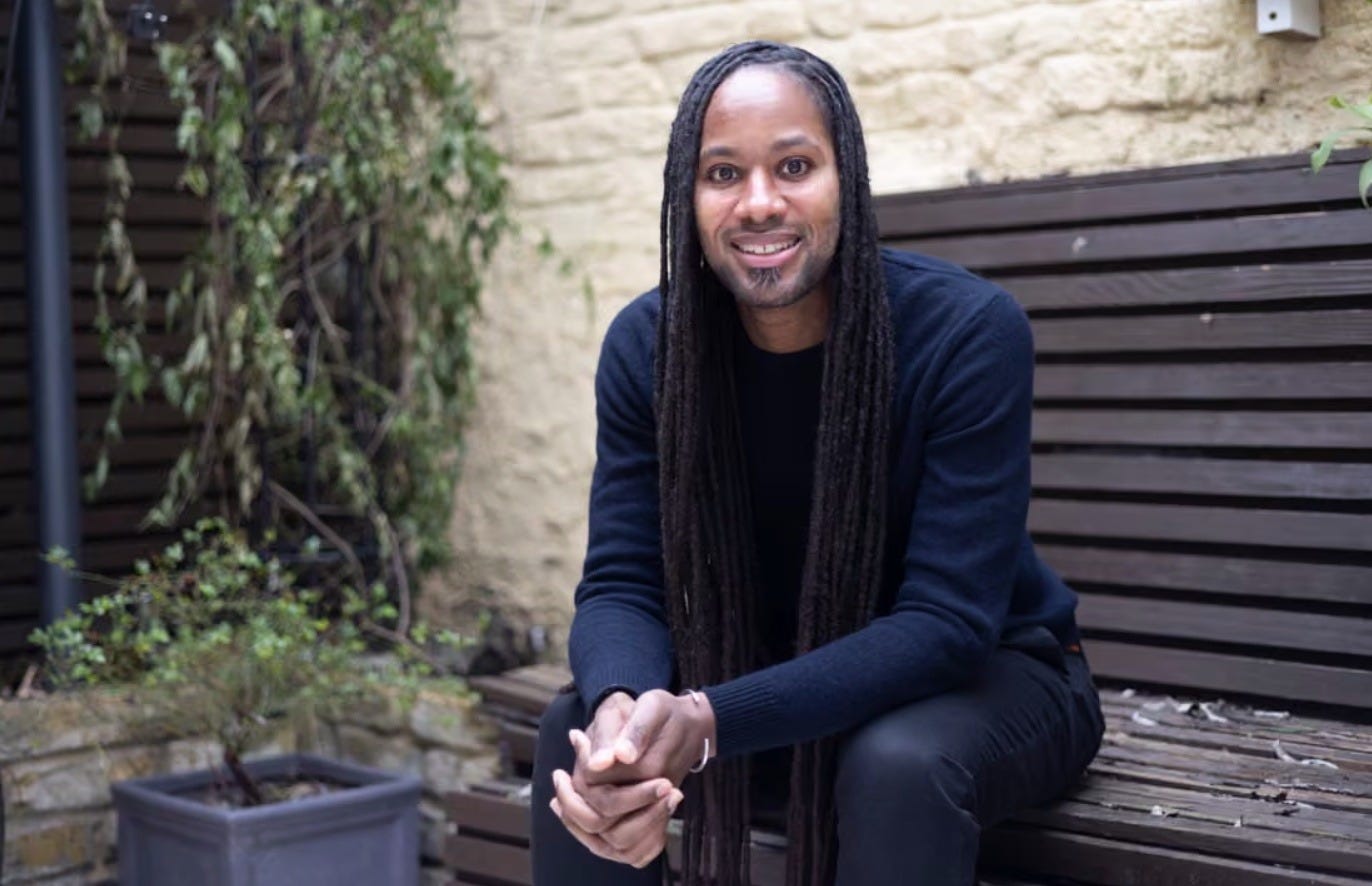
Jason Arday is dead. He was 41 years old. He was found unresponsive at his home in Battersea on Friday afternoon, only days after resigning his professorship at the University of Cambridge. The police have described his death as unexpected but not suspicious. At the time of writing, its precise circumstances have not been officially established. So I will not claim to know what I do not know.
But there are things that we do know. We know that Arday had been subjected to weeks of extraordinary public scrutiny. We know that serious questions had been raised about plagiarism in his doctoral thesis and about claims he had made concerning his life and achievements. Those questions were legitimate subjects for investigation. Academic misconduct matters. Universities should investigate it, and journalists should be free to report it.
But we also know what happened next. A story about the conduct of one academic became ammunition in a much larger ideological war. Arday ceased to be merely Jason Arday, a complicated and fallible human being against whom serious allegations had been made. He became a symbol: the Black professor who supposedly proved that diversity had corrupted British universities; the embodiment of “DEI”; evidence that Cambridge had sacrificed standards on the altar of woke ideology. His individual failings became useful because they could be made to carry the weight of an entire political argument.
And then the hunt moved on. Only three days before Arday’s death, The Spectator published Andrew Gilligan’s article about another Cambridge academic under the headline “Meet Farah Ahmed, Jason Arday’s colleague.” Its opening sentence began: “After the Jason Arday disaster…” The man had already become a noun. A disaster. And another human being could now be introduced to the public through association with him.
This is the point at which criticism becomes something else. It is the point at which journalism ceases simply to establish whether an allegation is true and begins constructing characters for a morality play. One person becomes the fraud. Another becomes the extremist. An institution becomes captured. Individual facts become exhibits in a prosecution whose verdict—on diversity, Muslims, Black academics, “wokeness,” Cambridge, or whatever the enemy happens to be—has already been written.
J’accuse..!
I accuse those parts of the British right-wing press and blogosphere that turned the investigation of Jason Arday into entertainment.
I accuse those who understood perfectly well that there is a difference between exposing wrongdoing and enjoying someone’s destruction, and crossed that line anyway.
I accuse those who took allegations concerning one man’s scholarship and inflated them into an indictment of Black academics as a class.
I accuse those who used Jason Arday not simply to ask whether Cambridge had made mistakes in appointing him, but to insinuate that the very attempt to remedy racial inequality in British universities was itself fraudulent.
I accuse those who discovered that every new allegation generated clicks, retweets, subscriptions and applause, and therefore had an incentive not merely to investigate the story but to keep the spectacle alive.
And I accuse Nathan Cofnas, a disgusting racist who did more than almost anyone to turn the scrutiny of Jason Arday into a public campaign of humiliation. I accuse him not for investigating Arday’s scholarship, nor for publishing evidence of plagiarism where he believed he had found it, but for pursuing a human being with a relentlessness that seemed increasingly difficult to distinguish from persecution. Accountability does not require cruelty; intellectual criticism does not require degradation; and the discovery that someone has done wrong does not grant us permission to forget that he remains a human being. Whatever we eventually learn about the circumstances of Jason Arday’s death, those distinctions matter now more than ever.
And I accuse everyone who participated in that oldest and ugliest ritual of the crowd: convincing themselves that because a person has done something wrong, nothing done to that person can any longer be wrong.
None of this requires us to canonise Jason Arday. That matters. Perhaps some of the allegations against him were true. Perhaps some were false. Perhaps Cambridge made serious errors. Perhaps Arday did too. These questions should not disappear because he has died. To pretend otherwise would be sentimental, and sentimentality would ultimately do him no service.
But the moral test of a society is not whether it can show compassion towards the spotless. It is whether it remembers the humanity of the compromised.
There is a terrifying feature of the modern digital pillory that Zola would immediately have understood. Almost nobody feels responsible for it. One journalist writes an article. Another finds another discrepancy. A blogger adds a joke. Someone posts a photograph. Someone else produces a meme. Thousands pile into the replies. Each contribution, considered individually, appears trivial.
Nobody throws the fatal stone. Everybody throws a pebble. And because responsibility has been fragmented among thousands of participants, everyone can afterwards protest his innocence.
In 1898, Zola understood that a crowd can participate in an injustice while every member of it believes himself righteous. More than a century later, we have built machines capable of assembling such crowds in minutes.
So, to those who made legitimate scrutiny into a spectacle; to those who transformed a flawed human being into an ideological trophy; to those who mistook humiliation for accountability; and to those who joined the crowd because the crowd assured them that its target deserved whatever he received:
J’accuse!
Such a tragic outcome for this young man - and what a wonderful expose of the hideous enjoyment of digital (and, one suspects, actual 'real-world') mobbing. The essay puts me in mind of of a remark made by Adam Phillips, I think in his essay on "The Manicuring of Jacques Lacan"; it strikes me as highly pertinent to this young academic's plight: "How complicated can we allow someone to be before we stop trusting them?" In the age of algorithmically-enhanced mob-'jouissance', it would seem that the answer is, "Not in the slightest degree." Thank you for a wonderful and moving essay, Dr. Evans.